Côte D’Azur: The Art of Hospitality
Provence and the Côte d’Azur have long been synonymous with beauty, elegance, and exceptional hospitality. This storied region of Southern France serves as a living reminder that hospitality, at its best, is both a living art and a tradition.
The word "hospitality" has roots in the Latin hospes, meaning both "host" and "guest." Historically, hospitality was a sacred duty, a social and moral obligation to welcome travelers and strangers with care and dignity. Over time, this practice evolved into an vibrant industry, but its core principles remain unchanged: warmth, generosity, attentiveness, and creating a sense of belonging.
These values are on full display throughout the South of France. From the glamorous settings of Cannes to the relaxed elegance of Nice and the quiet charm of Villefranche-sur-Mer, each town offers a unique expression of what it means to welcome and serve. While Cannes draws attention with its luxury hotels and red-carpet allure, the real magic often lies in its side streets, quiet bistros where service is unhurried and genuine. Nice, shaped by both French and Italian influence, feels both cosmopolitan and intimate. Its bustling markets and seaside cafés exemplify the everyday rhythm of hospitality.
Perhaps nowhere is the spirit of service more thoughtfully embodied than at the Grand-Hôtel du Cap-Ferrat. This historic property exemplifies luxury without pretense. Guests are not merely accommodated; they are anticipated. From the moment of arrival, every detail from a perfectly timed welcome drink to an unobtrusive but attentive staff reflects the refined art of making others feel both valued and at ease.
Equally inspiring is the experience in Villefranche-sur-Mer, where the art of hospitality is practiced in more humble, but no less meaningful ways. The town’s restaurants and shops welcome visitors with familiarity and grace. Conversations are unforced. Meals are paced with intention. Whether in a fine restaurant or a family-owned café, the approach is the same: to create a moment worth remembering.
Cuisine plays a central role in this cultural exchange. Traditional dishes like Bouillabaisse and Moules Marinières are not simply meals but expressions of place, history, and care. Bouillabaisse, now a symbol of Provençal culinary heritage, originated in Marseille as a humble fisherman’s stew. It was made using unsellable rockfish boiled with seawater, herbs, and vegetables. Over time, it evolved into a refined dish, often served in multiple courses, complete with garlic rouille and toasted bread. Today, it embodies the transformation of resourcefulness into ritual. One venue which brings to life this savory dish was Le Quai 28, a seaside eatery that specializes in seafood.
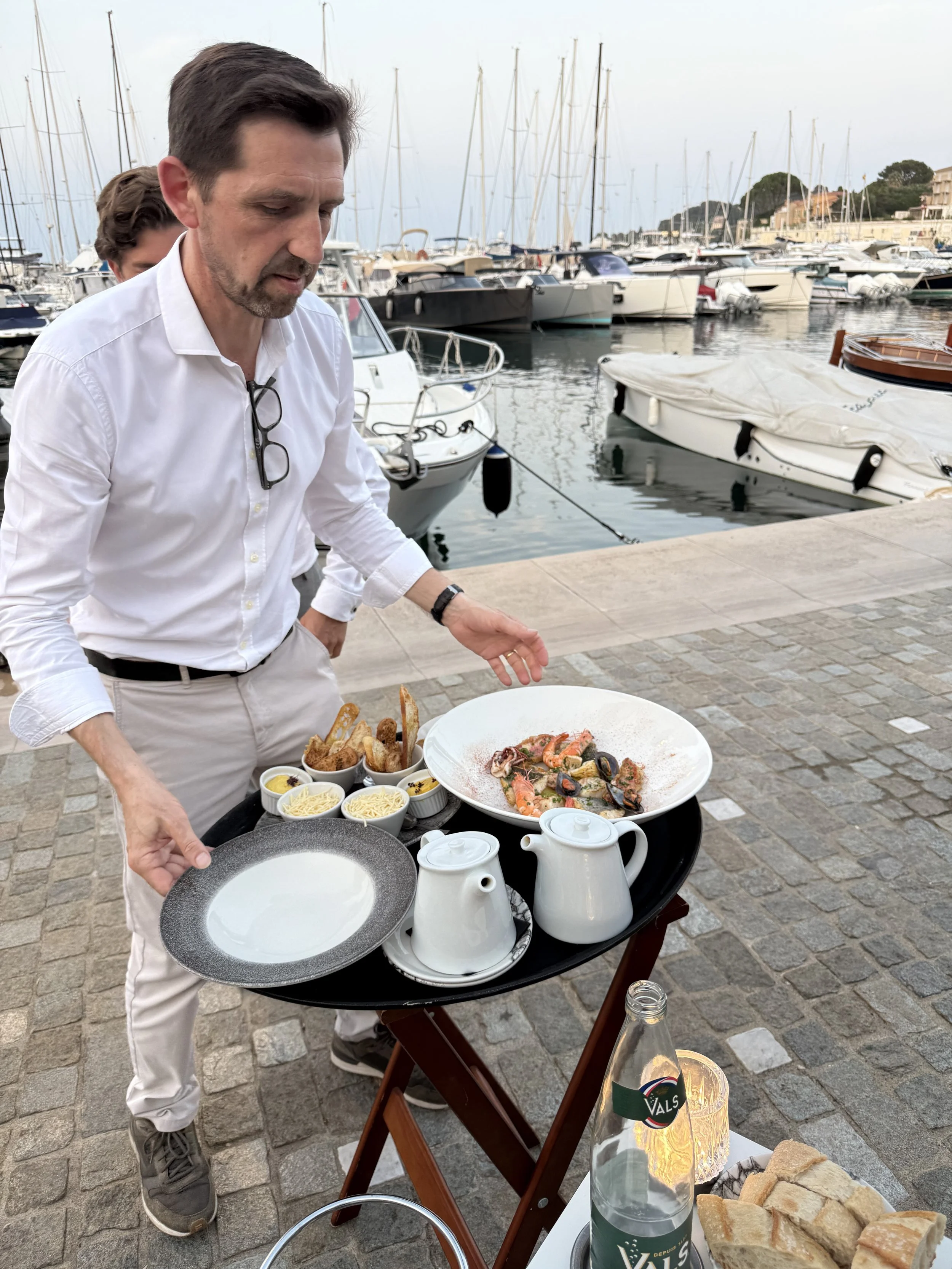
Another tradition worth highlighting is the region’s fondness for Pastis. First commercialized in the early 20th century after the ban on absinthe, Pastis quickly became a staple of Provençal life. This anise-flavored apéritif, diluted with water until it turns a cloudy pale gold, is more than a drink—it's a symbol of simplicity, summer, and the pleasure of doing nothing. Sipped slowly in shaded squares or seaside terraces, it marks the transition between day and evening, between activity and relaxation.
The elegance of the region can also be traced back to the Belle Époque, a period between the late 19th century and the start of World War I. During this era, aristocrats and artists from across Europe would retreat to the South of France for the summer, drawn by its mild climate, scenic coastline, and leisurely pace. The architecture, promenades, and seaside villas that define the Riviera today were largely shaped during this time. The culture of refinement, leisure, and attention to beauty that emerged then continues to influence the region's hospitality ethos.
The South of France is not only a destination. It is a lesson in how hospitality can be practiced with authenticity and grace. It reminds us that the spaces we create in restaurants, hotels, shops are not just places of business, but places where human connection is fostered and where people feel seen.
At its best, hospitality is not transactional; it is transformational. And in the quiet streets of Villefranche or the grand halls of Cap-Ferrat, that truth still holds.